
Clear sampling plan
We explain why each sample is being taken, what it can and cannot tell you, and how many samples make sense for your layout and concerns.
Serving Roseville, California & surrounding areas
24/7 Emergency Response
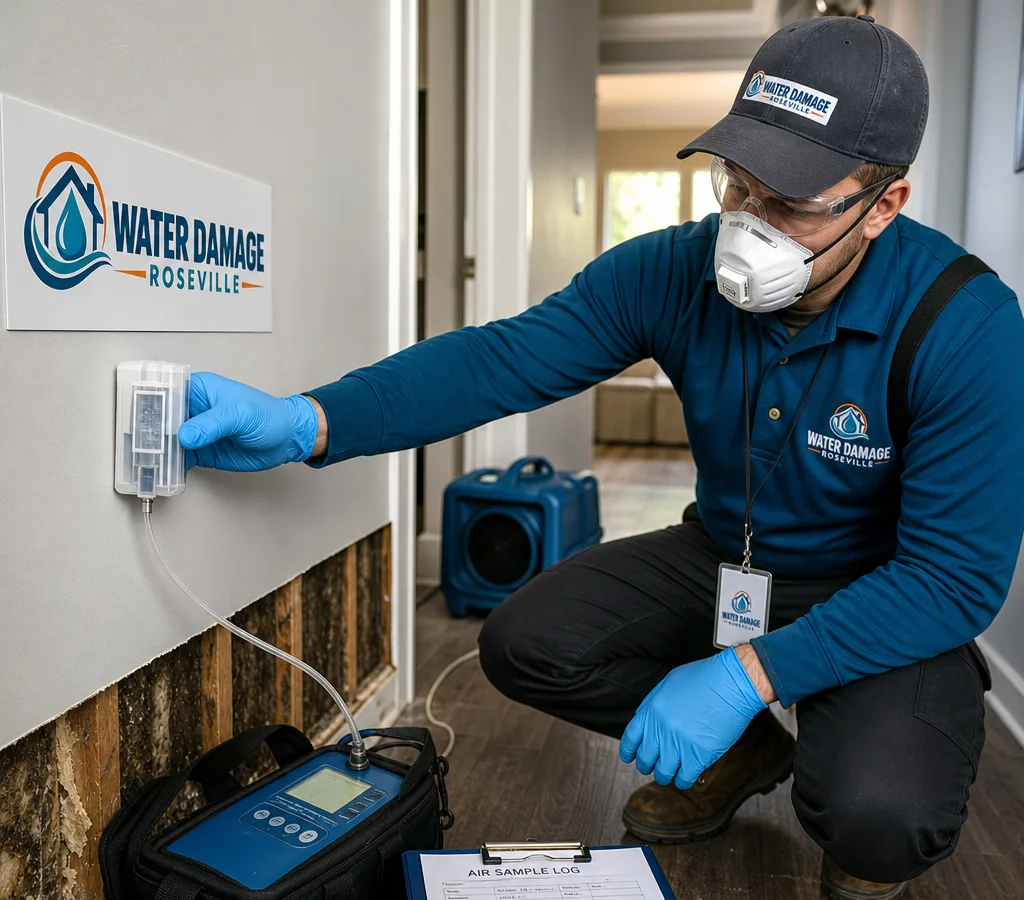
Mold testing in Roseville
If you smell something musty, see staining, or have unexplained allergy symptoms at home, testing is the fastest way to stop guessing. Our certified mold sampling and lab analysis gives you clear results, room-by-room context, and practical next steps.
When to schedule mold testing in Roseville
Mold grows where moisture lingers, and you do not always see it on the surface. Mold testing Roseville homeowners request is usually driven by a change in indoor air quality, recent water intrusion, or a real estate deadline.
Consider scheduling testing if you notice:
In Roseville and the greater Sacramento area, long hot summers followed by cooler nights can make condensation and HVAC-related moisture issues easy to miss. Testing helps determine whether what you are seeing is likely microbial growth, where it is concentrated, and whether conditions are consistent with an active moisture source.
If you recently had a leak, starting with a professional assessment matters. For background on moisture events and what typically follows, many homeowners begin at Water Damage before deciding whether sampling is needed.
Inspection, sampling and reporting
A proper mold inspection is more than taking one quick sample. The goal is to collect defensible data, tie it back to building conditions, and explain what the results mean for your specific rooms.
Typical mold testing in Roseville can include:
Your lab report generally provides:
Testing cannot replace fixing the moisture problem. The most useful reports connect results to what is happening in the building, so you can decide whether you need targeted cleaning, controlled containment, or additional investigation behind finishes.
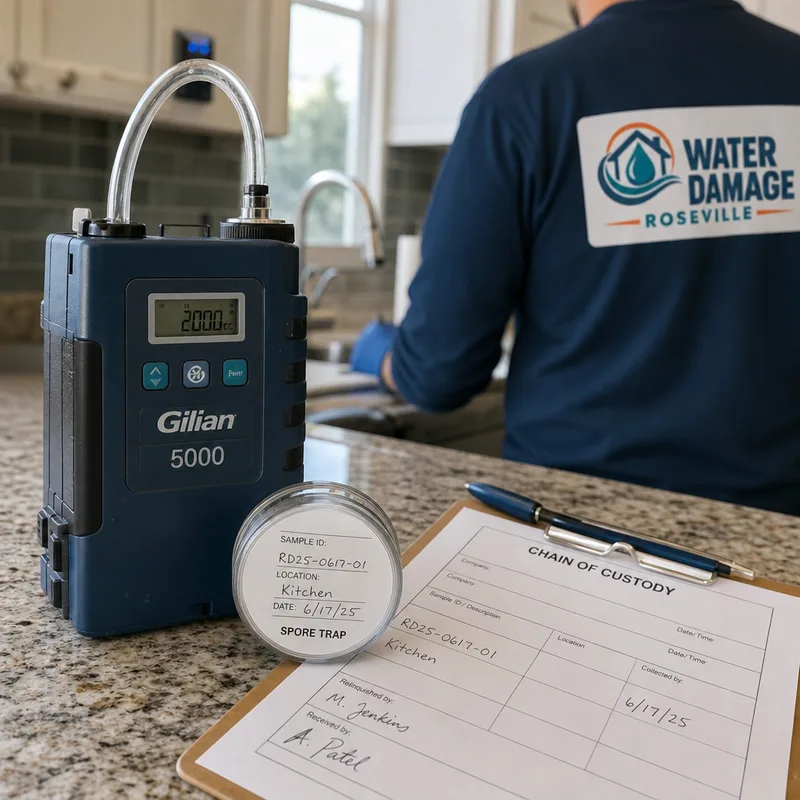
Useful results, clearly explained
We explain why each sample is being taken, what it can and cannot tell you, and how many samples make sense for your layout and concerns.
Samples are sent for professional analysis so you get documented findings you can share with property managers, contractors, or a real estate transaction.
Results are interpreted with the building conditions in mind, including ventilation, material moisture, and where air moves through the home.
You receive guidance on what to do next, whether that is correcting a moisture source, targeted cleaning, or further investigation.
We use clean handling and labeling for samples and keep the work area tidy so the results reflect the home, not cross-contamination.
Inspection through results review
We start with what you are seeing or smelling, any known leaks or past repairs, who needs the report, and which rooms are most urgent.
We look for visible indicators and use moisture measurements to identify materials that may still be damp. This helps avoid sampling at random.
We take an outdoor control sample and targeted indoor samples, plus surface sampling when there is visible growth. Each sample is labeled and documented.
Samples go to a qualified lab for microscopic analysis and reporting. Turnaround depends on the lab schedule and any rush option chosen.
You get a written report and a plain-English explanation of what the results suggest, which areas are most likely affected, and what actions are reasonable.
Planning your inspection
Mold testing in Roseville typically runs about $300 to $900 for most homes, depending on how many samples are taken and how complex the concerns are. A basic check with a small number of air samples is often at the lower end, while larger homes, multiple problem areas, or combined air and surface sampling can price higher.
Final pricing depends on the number of indoor locations, whether surface samples are needed, access such as attics or crawlspaces, and whether you want faster lab turnaround. The exact cost is confirmed once we review the home's layout and testing goals during the service visit.
Local moisture patterns
Mold is a moisture problem first, and the weak points tend to repeat from house to house. During mold testing Roseville residents request, we often focus on areas where water or humid air gets trapped.
Common hotspots:
Neighborhood layouts can affect where we start looking. In West Roseville, newer construction still sees issues around builder-grade bath fans and tight building envelopes that hold humidity if ventilation is not used consistently. In older parts of Roseville and near established corridors, aging window seals, older plumbing connections, and past repairs behind drywall can complicate what you see on the surface.
If testing suggests a larger hidden issue tied to a prior leak, many clients also want a plan for drying and repairs. When moisture damage is part of the picture, Water Damage Roseville can help coordinate the next steps after findings are confirmed.
“We had a musty smell in a back bedroom that kept coming back. The testing plan made sense, the report was easy to understand, and it gave us enough detail to address the source instead of repainting and hoping.”
“During our home purchase we needed answers fast. They took samples in the rooms that mattered, explained the outdoor control sample, and walked us through what the lab results meant for the inspection contingency.”
Answers before testing
Most mold testing appointments take about 60 to 120 minutes on site, depending on the number of rooms, accessibility such as an attic or crawlspace, and how many samples are collected. The inspection, moisture checks, and careful labeling take time, especially when comparing multiple indoor areas to an outdoor control sample.
Lab turnaround is commonly 2 to 5 business days after sampling, with faster options sometimes available depending on the lab schedule. If timing matters for a real estate transaction in Roseville, mention your deadline up front so the sampling plan and lab submission can match it.
If growth is visible, the first priority is fixing the moisture source, but testing can still be useful when you need documentation, are unsure how widespread it is, or have multiple rooms involved. A surface sample can help confirm what is on a specific material, and air sampling can indicate whether spores are elevated in adjacent spaces.
Keep the home in normal living conditions unless you are given different instructions for your situation. Avoid heavy cleaning, running air purifiers on high, or opening windows for long periods right before sampling because it can change airborne levels and make comparisons less meaningful.
We can test air and surfaces in accessible areas, and we can often identify likely damp zones with moisture readings, but sampling inside a concealed cavity usually requires an access point. If conditions indicate a hidden issue, we will explain the least disruptive ways to confirm it and whether a targeted opening by a qualified contractor makes sense.
Testing can strongly suggest where mold is most concentrated and whether the indoor environment shows signs of active growth, but it does not automatically locate every hidden reservoir. Pairing results with moisture measurements and a careful inspection provides the best direction for pinpointing the moisture pathway.
Stop guessing about indoor air
Share what you are noticing and which rooms concern you most. We will recommend a sensible sampling plan, complete certified testing, and provide a written report with next steps you can act on.